

Daily Auto-Yield 2.7%

Auto-compounded. No lock, no transfer required. Your funds stay in your wallet with complete control.

No KYC No KYC Proof-of-Stake Proof-of-Stake Blockchain Verified Blockchain Verified Non-Custodial Non-Custodial Auto-Compounding Auto-Compounding



How to Earn Bitcoin & Stablecoins: A Beginner's Mining Guide
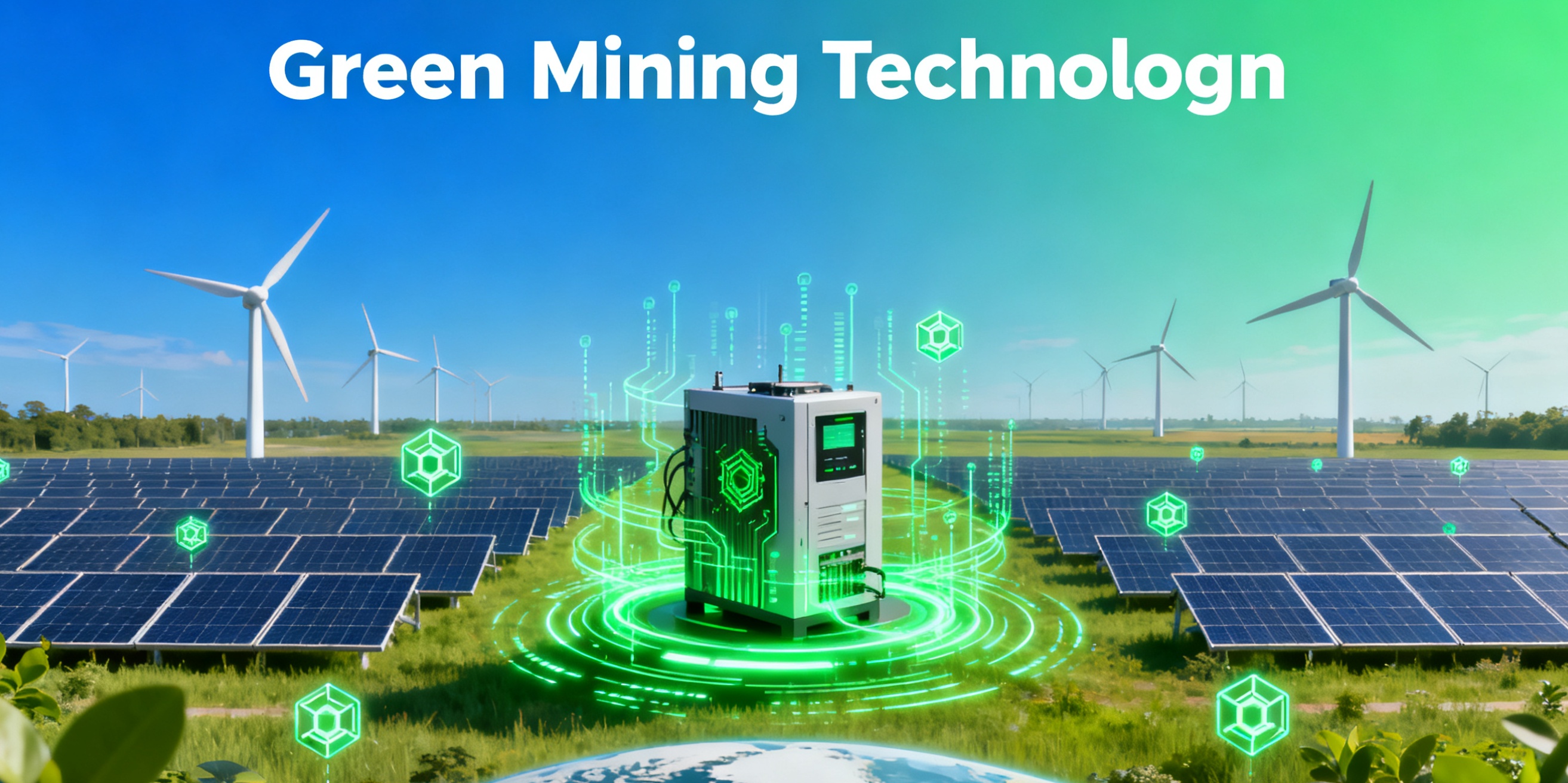
How to Earn Bitcoin & Stablecoins: A Beginner's Mining Guide

For many entering the cryptocurrency world, the question isn't just "how to mine Bitcoin," but how to generate a more stable digital asset income. This guide explores the modern interpretation of "mining" for both Bitcoin and stablecoins, offering actionable strategies for newcomers.

Traditional Bitcoin mining is the process of using specialized computer hardware (ASICs) to solve complex mathematical problems, securing the Bitcoin network and earning new BTC as a reward. However, this is now a highly competitive, capital-intensive industry requiring significant investment in equipment and electricity, making it inaccessible for most individuals.

So, how can the average person participate? The term "mining" has evolved. Today, it often refers to any process of earning crypto rewards through contribution or participation. Here are practical ways to "mine" or earn both Bitcoin and stablecoins.

For earning Bitcoin, several user-friendly options exist. Bitcoin cloud mining involves renting hashing power from a service provider. While it lowers entry barriers, thorough research is crucial to avoid fraudulent schemes. A more direct method is through Bitcoin mining pools, where individuals combine their computational power to increase the chance of earning block rewards, which are then distributed among participants proportionally. Alternatively, consider mining other, less competitive cryptocurrencies that can be automatically swapped for Bitcoin using services like NiceHash.

Stablecoins, like USDT or USDC, are designed to maintain a 1:1 peg with a fiat currency and are not mined through computation. Instead, you can "earn" them through various decentralized finance (DeFi) activities often analogized as mining. Yield farming or liquidity mining is a primary method. Here, you provide your crypto assets (e.g., a pair of ETH and a stablecoin) to a decentralized exchange's liquidity pool. In return for facilitating trades, you earn fees and often additional token rewards, typically paid in stablecoins or governance tokens.

Another stablecoin earning strategy is staking. Many proof-of-stake blockchains and DeFi platforms offer rewards for locking up your existing stablecoins or other crypto assets to help secure the network or protocol. These rewards are paid out in stablecoins or the platform's native token. Furthermore, some centralized and decentralized platforms offer simple interest for holding stablecoins in savings accounts or vaults, similar to a bank savings account but with potentially higher yields.

Before starting, understanding the risks is paramount. Bitcoin's price is volatile. Cloud mining and pool contracts can have hidden fees. DeFi activities like liquidity mining carry risks of smart contract bugs, impermanent loss (where the value of your deposited assets changes compared to simply holding them), and platform failure. Always conduct your own research (DYOR), start with small amounts, and never invest more than you can afford to lose. The landscape of crypto earnings is dynamic, offering opportunities beyond traditional mining for those willing to learn and manage risk responsibly.

Comment

MTMining

Decentralized USDC Auto-Yield Platform
No KYC
Proof-of-Stake
Blockchain Verified
Non-Custodial

How to Earn Bitcoin & Stablecoins: A Beginner's Mining Guide

How to Earn Bitcoin & Stablecoins: A Beginner's Mining Guide

For many entering the cryptocurrency world, the question isn't just "how to mine Bitcoin," but how to generate a more stable digital asset income. This guide explores the modern interpretation of "mining" for both Bitcoin and stablecoins, offering actionable strategies for newcomers.

Traditional Bitcoin mining is the process of using specialized computer hardware (ASICs) to solve complex mathematical problems, securing the Bitcoin network and earning new BTC as a reward. However, this is now a highly competitive, capital-intensive industry requiring significant investment in equipment and electricity, making it inaccessible for most individuals.

So, how can the average person participate? The term "mining" has evolved. Today, it often refers to any process of earning crypto rewards through contribution or participation. Here are practical ways to "mine" or earn both Bitcoin and stablecoins.

For earning Bitcoin, several user-friendly options exist. Bitcoin cloud mining involves renting hashing power from a service provider. While it lowers entry barriers, thorough research is crucial to avoid fraudulent schemes. A more direct method is through Bitcoin mining pools, where individuals combine their computational power to increase the chance of earning block rewards, which are then distributed among participants proportionally. Alternatively, consider mining other, less competitive cryptocurrencies that can be automatically swapped for Bitcoin using services like NiceHash.

Stablecoins, like USDT or USDC, are designed to maintain a 1:1 peg with a fiat currency and are not mined through computation. Instead, you can "earn" them through various decentralized finance (DeFi) activities often analogized as mining. Yield farming or liquidity mining is a primary method. Here, you provide your crypto assets (e.g., a pair of ETH and a stablecoin) to a decentralized exchange's liquidity pool. In return for facilitating trades, you earn fees and often additional token rewards, typically paid in stablecoins or governance tokens.

Another stablecoin earning strategy is staking. Many proof-of-stake blockchains and DeFi platforms offer rewards for locking up your existing stablecoins or other crypto assets to help secure the network or protocol. These rewards are paid out in stablecoins or the platform's native token. Furthermore, some centralized and decentralized platforms offer simple interest for holding stablecoins in savings accounts or vaults, similar to a bank savings account but with potentially higher yields.

Before starting, understanding the risks is paramount. Bitcoin's price is volatile. Cloud mining and pool contracts can have hidden fees. DeFi activities like liquidity mining carry risks of smart contract bugs, impermanent loss (where the value of your deposited assets changes compared to simply holding them), and platform failure. Always conduct your own research (DYOR), start with small amounts, and never invest more than you can afford to lose. The landscape of crypto earnings is dynamic, offering opportunities beyond traditional mining for those willing to learn and manage risk responsibly.

Comment